Archive

Author Archive

New Circuit Breaker Nuisance Tripping, Trip Element Never Set Up

February 9th, 2011 Comments off

MIDWEST frequently gets calls about brand new circuit breakers nuisance tripping. The owner often believes they have a
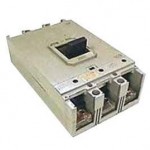
Siemens HR3B2000 Circuit Breakers For Sale by MIDWEST

Siemens HR3B2000 Circuit Breakers For Sale by MIDWEST

 defective new breaker, because it just should not be tripping. For example, a 2000 amp Square D or Cutler Hammer or General Electric main circuit breaker for new switchgear suddenly trips in the middle of the day two weeks after the new switchgear is energized for the first time. It’s agonizing
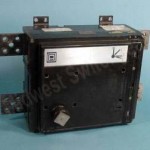
Square D PAF26900 Circuit Breakers For Sale by MIDWEST

Square D PAF26900 Circuit Breakers For Sale by MIDWEST

when an owner spends a lot of money for new equipment and suddenly they have a problem they never experienced with the old equipment which had been around for 30 years. If he or she is in charge of the new project, or maybe just in charge of maintenance, they can be in big trouble with non technical management. Sometimes they are so panicky it is hard to get the information needed to determine what the problem may be.  We calm them down by telling them they probably don’t need a new replacement 2000 amp Siemens or Cutler Hammer circuit breaker. Usually the problem is the pickup settings of the circuit breaker have not been properly set. If an analysis was performed to determine the proper breaker settings, it may have never been given to the installation contractor. Equipment delivered from the manufacturer is often set in minimums. Minimum pickups and minimum trips times. We might see a 2000 amp main circuit breaker set to pickup at 50%, 1000
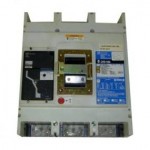
Cutler Hammer CRD320T35W Circuit Breaker For Sale

Cutler Hammer CRD320T35W Circuit Breaker For Sale

amps. Or we might see the ground fault protection set at 100 amps pickup, range may be 100 to 1200 amps, and possibly 0.1 seconds (minimum) delay. All the settings on adjustable circuit breakers should be determined by an engineering analysis and set up accordingly. Very low ground fault pick up settings are most insidious because a small ground fault deep in the power distribution system may trip a new Siemens circuit breaker for the whole facility.  So once we get the manufacturer and catalog number, we can tell them what to look for, as far as settings on their brand new circuit breakers. Usually a few quick phone

 calls will locate the analysis data and on site instructions to their electrical contractor will make the problem go away.  If an analysis was not performed, temporary conservative settings might be used until a proper engineering analysis can be performed. The National Electrical Code does recommend testing the ground fault “system” of new main switchboards.

Circuit Breaker Trip Device – Hidden Defect

February 2nd, 2011 Comments off
 
Square D PAL362000 Circuit Breakers For Sale

Square D PAL362000 Circuit Breakers For Sale

MIDWEST asked our Switchgear Engineering Technicians for an example of a molded case circuit breaker that had a hidden defect that could only be found by experienced testing.  We find many used circuit breakers that have defects that can be found by a close visual inspection.  Sometimes the defect may not be obvious but an experienced Engineering Technician knows where to look and would find the problem. In the business of repairing and reconditioning circuit breakers, we find about every possible problem that can occur. Whether we are reconditioning a replacement Westinghouse, General Electric or Siemens circuit breaker, many of the problems are the same. But we also frequently find hidden defects that could only be detected using proper testing.


For this example, let’s just use a replacement Square D PAL362000 circuit breaker. The breaker was reconditioned, which involved removing the cover to thoroughly inspect and maintain the interior of the Square D circuit breaker. The technician was immediately suspicious because he detected the slight smell of an overheated circuit breaker. Once you get that smell in your nose, you never forget it in the future. Even a small whiff tells you there may be a problem. In this case everything visible was in very good condition. There were no signs of overheating at the contacts or the line or load side breaker terminals. But the contact resistance test results indicated very high resistance on the center pole. A DLRO, digital low resistance ohmmeter, was used to locate the problem. The usual location is either the contacts, the bolted connections to the trip device, or the line or load side terminals or lugs. In this case the defect was inside the trip device. And a close sniff of the trip element confirmed it. MIDWEST performed an additional test, a high current test, to determine the voltage drop and therefore the resistance in the trip device on the center pole. Even though this replacement Square D circuit breaker looked just great, the trip device was defect and had to be replaced.

Square D MAL361000 Circuit Breaker May Take 5 Minutes 40 Seconds to Trip

January 20th, 2011 Comments off


Square D MAL361000 Circuit Breaker For Sale

Square D MAL361000 Circuit Breaker For Sale

MIDWEST had a customer call because they had an old Square D MAL361000 and it took forever to trip when they had a serious overload problem. He bet it took 3 minutes. This brought up a common misconception concerning how circuit breakers provide protection. When we provide Hands-On Safety Training, this is one of the items we are sure to cover. First of all, whether Square D circuit breakers, Cutler Hammer circuit breakers, GE General Electric circuit breakers, or Siemens circuit breakers, they are not designed to protect people directly. They are designed to protect connected equipment, yet not nuisance trip due to a non harmful transient event. By protecting equipment, circuit breakers consequentially protect people. His old Square D circuit breaker may have taken over 3 minutes to trip and it may have performed the way it was designed. Breakers have a performance specification called a “Time Current Curve,” TCC. In basic terms, whether Westinghouse circuit breakers or ABB circuit breakers, they do not trip immediately at the trip setting. A 1000 amp circuit breaker does not trip right away at 1000 amps or even 1500 or 2000 amps. As a matter of fact, an old 1000 amp Square D MA circuit breaker may have a trip range of 45 seconds to 340 seconds when overloaded with 3000 amps, 300%.  In basic terms, it should not trip in less the 45 seconds and may take as long as 340 seconds to trip. This may seem crazy but, again, it is designed to protect the equipment connected to it while not nuisance tripping. The same breaker would have an instantaneous setting which would determine at what current value the circuit breaker would trip immediately. But, if that setting is over 300%, ie 3000 amps, the breaker would cook for a long time before tripping.  By that time you can smell the breaker overheating.

Emergency Replacement Circuit Breaker for Christmas

January 12th, 2011 Comments off
 
General Electric SEDA24AT0100, 2 Pole, 100 Amp

General Electric SEDA24AT0100, 2 Pole, 100 Amps

Sometimes we get calls from a customer that is in a real jam and has limited resources or time to get out of it. And sometimes these problems are over small pieces of electrical equipment, such as a replacement General Electric circuit breaker, two pole 100 amps. We got such a call just before Christmas. A home owner’s electrician needed a replacement circuit breaker, 2 pole 100 amps, for an old home. The existing circuit breaker would not latch closed. They had limited information on the old circuit breaker. They would have changed the whole panel but they couldn’t get it done before Christmas.

First we explained they had to contact the electric utility because they were changing the main breaker for a house. We sent them two styles of recondition circuit breakers because their information was not specific enough. We told them to use the replacement circuit breaker that was correct and to return the other breaker to  us. Their ‘replace circuit breaker’ problem, as they called it, was solved and they had lights for Christmas. They returned the other breaker to MIDWEST. Their problem wasn’t because they needed an unusual replacement Square D circuit breaker or replacement Cutler Hammer circuit breaker. Their problem was because the location was Hawaii.  It was a big problem for a small customer, but it made everyone feel great that we took care of them for Christmas.

Circuit Breaker Large Over Current Time Delays

December 29th, 2010 4 comments

In MIDWEST’s training classes for qualified personnel, there is a segment where we explain the long time delay range within which a Square D 1000 amp circuit breaker should trip due to an overload. This information is received with anything from amazement to skepticism to outright disbelief, even though we show the Square D circuit breaker characteristic trip curve.  The overload time delay information is not restricted to Square D circuit breakers. It’s the same with Cutler Hammer, GE General Electric, Siemens, ITE, Westinghouse, Merlin Gerin, or Federal Pacific circuit breakers.


In our training example we use an old Square D 1000 amp MA type circuit breaker.  If we tested this circuit breaker at 3000 amps, that’s 300%, the minimum to maximum trip range is about 45 seconds to 340 seconds. It might trip in 45 seconds or it might not trip for 340 seconds.  This is an old thermo-magnetic circuit breaker, which typically works by heating a bi-metal in the over current trip device. Many newer breakers use electronic over current devices which have more repeatable overload time delay test results.


The illusion is that these Square D, Cutler Hammer, Westinghouse circuit breakers are designed to directly protect people. They are not. The breakers protect the equipment connected to them and they protect the electrical system. They are designed for the characteristics of the equipment connected, such that connected equipment will not be damaged by an overload or fault. This is a basic limited explanation. So, when you think of molded case circuit breakers, power circuit breakers or air circuit breakers, it’s important to know these breakers don’t just trip right at the breaker trip device rating.       

Scrap Circuit Breakers

December 23rd, 2010 Comments off


ED3100 Cutler Hammer Circuit Breaker

ED3100 Cutler Hammer Circuit Breaker

This morning I walked past three drums of old, obsolete, used circuit breakers. All these breakers were going to the scrap heap. Actually they go to a recycling company that crushes them and recycles the metal parts. If someone was to ask what we do with the defective circuit breakers, this would be the answer.  These drums contained Square D, Westinghouse, Cutler Hammer, Siemens, GE General Electric circuit breakers and probably many other manufacturers. If a circuit breaker is mechanically or electrically defective, if it doesn’t pass our inspection and testing quality control, it gets tossed into the scrap heap, actually drums. 

If you were to look at the breakers in the drums, you would find many that look in perfect condition, some even mint. But, if you tore them apart, you might find the contacts blasted beyond any possible repair. This is found with an internal inspection, contact resistance tests, or by a voltage drop test during over current testing.  One might be surprised how many old and even new surplus circuit breakers are rejected based on the visual inspection. And, again, you would be amazed at how many new looking circuit breakers fail one or more of the quality control tests.

No one manufacturer or model, whether Square D, Cutler Hammer or GE General Electric circuit breakers, is exempt just because of the name on the label. And no breaker can be evaluated just based on its appearance. Sometimes a circuit breaker may fail a test and we really have to look hard to find the cause of the defect. Sometimes the defect may not be visible, for example a defective over current trip device.


So you can’t judge the condition of an old or new surplus circuit breaker by its appearance. MIDWEST is always testing new circuit breakers as part of our Acceptance Testing Services on new switchgear, a common practice for hospitals, data processing centers, and mission critical facilities. And we do find deficiencies in brand new circuit breakers.  So again, appearances can be deceptive. 

100% Rated Square D 2000 Amp Circuit Breaker

December 15th, 2010 Comments off

MIDWEST lost a battle with the maintenance dollar.  A manufacturing plant had a 2000 amp Square D circuit breaker that was loaded to over 1800 amps, sometimes hitting 1900.  We detected the heavily loaded breaker during an Infrared Scan of the facility.  This was an old Square D circuit breaker mounted in a tap box feeding a 2000 amp bus duct. The local contractor recommended they just replace the breaker with a 100% rated breaker. He said they could use Square D, Cutler Hammer, or General Electric, whoever was cheapest and would fit. Because of the bus configuration, it only made sense to use the same Square D circuit breaker. The customer bit on the idea that just replacing the old circuit breaker would solve their problem and save them a lot of money. We strongly disagreed. Replacing the circuit breaker would make zero difference, in this case. The old Square D molded case circuit breaker was an 80% rated breaker.  More recent replacement Square D circuit breakers, same frame, model number, current rating, were 100% rated, ie 2000 amps. The 100% rated replacement circuit breaker was specified 100% if it was in an enclosure with a much larger volume than the old breaker. In other words, to achieve the 100% rating, the breaker must be in a much larger enclosure so as to properly dissipate the heat generated from 2000 amps. This all makes sense. But to just replace one breaker, whether GE General Electric, Cutler Hammer, Siemens, or Square D, with a 100% rated breaker and not address the installation requirements to achieve the higher rating can be a waste of dollars.  A quick check of the old and new circuit breaker specifications, will tell what the installation requirements are. This is the technical added value that is often ignored, or just not known, in too many facilities, as experienced personnel disappear.

            This facility decided to replace the circuit breaker, but later transferred load off the bus duct.