3 Second Sophisticated Circuit Breaker Test

August 23rd, 2010 Comments off

Here is another MIDWEST real world experience. This time dealing with circuit breakers, specifically three old power air circuit breakers.  Because of the extremely difficult location of the breakers, getting equipment to test the old circuit breakers was nearly impossible. And the cost would have been astronomical. There seemed to be serious problems with the circuit breakers. These were bolted in place generator breakers and the switchboard they were in had to provide power at all times.  A short outage could be catastrophic. But the breakers were tripping and the generator operators needed to know if the breakers were the problem or if they had load problems somewhere in their power system. The circuit breakers had old oil dashpot type over current devices and the operators wanted to know if retrofitting the circuit breakers with new electronic over current devices would make their problem go away. So, during a rather tense meeting, MIDWEST recommended the following three tests on two poles of each breaker.  The first test would take about 3 seconds. The second test would take about 8 seconds. And the third test could take as long as 90 seconds. We thought these tests would be nearly 100% as effective as actual high current testing in determining the condition of the dashpot over current devices. These were not calibration tests. They were function tests. The first sophisticated test procedure was to look at the oil dashpots. If we saw signs of oil weepage out of the circuit breaker oil filled dashpots, the breaker over current protective devices, ie the oil dashpots, were deficient and the breaker should be retrofitted. Simple. The second test involved manually pushing the instantaneous lever of the old oil dashpots.  If the action and resistance was normal and the dashpot reset properly, no nuisance problem.  The third and last test was to simulate an over current condition by a slow steady push on the delay component of the dashpots on the outside phases. For a veteran in the maintenance, repair and testing of these old air circuit breakers, these checks are very simple and very reliable in detecting defective oil dashpots. The actual test time per circuit breaker took us less than 45 seconds. We were not calibrating anything, but we did determine that all three circuit breakers had defective over current protective devices and needed to be retrofitted with new electronic over current protection. This was done and their problem was solved. How the retrofitting was done is a good subject for another blog. By the way, these circuit breakers were located in Antarctica.
When is a Circuit Breaker not a Circuit Breaker?

August 16th, 2010 1 comment

Question:  When is a circuit breaker not a circuit breaker?


Answer:   When it doesn’t trip and break the circuit.


This is not just a silly riddle.  It unfortunately is a fact of life.  Circuit breakers, either like the small ones in your home, or large industrial ones as supplied by MIDWEST, usually only trip when presented with an extra heavy load, or a short circuit.  This is great news.


But there is bad news also.  In the case of a poor connection somewhere in the circuit path, or a not-so-short short circuit, a circuit breaker will not trip.  To be specific, the electrical engineers at MIDWEST would say that the first case is a high impedance series circuit, and the second is a low impedance parallel circuit.  Either way, very significant heat can be generated in places where heat can cause a fire.  And because the current flowing can be below the trip value, the circuit breaker will not trip to break the circuit. 


Examples of a high impedance series circuit might be a loose screw on a lug, or poor wire nut connection, or a bad solder joint.  These essentially become an additional series resistive component in the circuit.   


Examples of a low impedance parallel circuit are carbonized arc paths on a printed circuit board, a bare wire brushing up against something it shouldn’t, or the failure of a normal load.  These essentially become an additional parallel resistive component in the circuit.   


All of these conditions can easily result in an electrical fire, or even a catastrophic arc flash.  In an industrial setting, one of the products that MIDWEST offers is arc flash and fire resistant Arc Flash Personal Protective Equipment.  MIDWEST also offers Infrared Scanning and Ultrasonic Scanning Services, which is a great way to locate the troublesome series or parallel faults causing dangerous high temperatures.


It is probably safe to say that most electrical fires can be attributed to a circuit fault with just the right impedance resulting in circuit current that does not trip the circuit breaker or blow a fuse.  Often these faults occur in out of way places such as walls or electrical sockets.   


So, when is a circuit breaker not a circuit breaker?   


Answer:  When the impedance of the circuit is such that the current is less than trip current, and the circuit breaker does not trip to break the circuit.

Why didn’t the Circuit Breaker trip in a Surge Suppressor Strip?

August 12th, 2010 2 comments

MIDWEST received a call for help lately when a client had a dozen surge suppressor strips (with circuit breakers) virtually start on fire.  The interesting thing about this client was that it was a large metropolitan area’s city hall.  The surge suppressor strips were powering the computers that controlled the jail.  The surge suppressor strips had been in place for 10 years without incident.  All of a sudden, on two different floors, a dozen surge suppressor strips overheated.  The strange part is that the circuit breakers inside them did not trip.  Forensic examination  by MIDWEST revealed that the metal oxide varistors inside had overheated, causing the varistors and printed circuit board to burn up;  these were essentially carbonized.  This carbonized material supported arcing, and generated great quantities of heat.  But why didn’t the internal circuit breaker or any building circuit breaker trip when the arcs occurred?


First, a circuit breaker is an electromechanical device that interrupts a circuit when a large current flows through it.  But it has to be a large current, like three to ten times rated current, depending on the particular circuit breaker’s curves.  This is the breaker’s trip current; in reality, there are engineering curves and graphs that define a circuit breaker’s exact trip.  For a better description, see “How Circuit Breakers Work” and Wikipedia’s entry on circuit breakers.


Why didn’t the circuit breakers trip?  The answer is that if the resistance of the carbon tracking is high enough to limit the current flow to less than the trip current, then the breaker won’t trip.  And the heat just keeps building up inside the strip, resulting in fire.  Thus circuit breakers are not a cure-all; in general, a circuit breaker will trip when presented with a high current short circuit.  But if the fault impedance is current limiting, the circuit breaker gives no protection.  This current limited situation is the cause of most electrical fires and is highly dangerous.  These can be very elusive. 


But, one great solution to the problem is offered by MIDWEST’S Infrared Thermography Service.  But that is the subject of another blog.


Circuit Breaker Retrofitting Shortcut Mistake

July 16th, 2010 Comments off
For many years retrofitting General Electric circuit breakers and Westinghouse, now Cutler Hammer, circuit breakers was very common.  Replacing the old dashpot style over current devices with modern electronic over current protection greatly improved the reliability and the flexibility of the retrofitted circuit breaker. This was particularly true when using the newer generation electronic retrofit kits. We still run into many of these retrofitted circuit breakers today.  Typically the retrofits were well done. But sometimes we run across a circuit breaker that was retrofitted in the field, on site. This saved time and was often done quickly during shutdowns or to just save cost. Ignoring the need to maintain a circuit breaker to be retrofitted, MIDWEST never retrofitted circuit breakers on site because of the need to perform complete over current testing and special load testing after the retrofit was complete.  Companies that retrofitted breakers on site could test the breaker by secondary injection method. That would prove the new electronic device operated properly and it would prove the old Westinghouse circuit breaker would actually trip, but it did not proof test the complete system. Worse yet were occasions when we might see a General Electric circuit breaker, for example, that had been retrofitted on site and not even tested by secondary injection method by the contractor that did the work.  MIDWEST recognizes this when we are troubleshooting a circuit breaker that apparently failed to trip and we discover that it would never trip under any circumstances.  We do a positive trip test. Tough test, takes about 12 seconds. We simply confirm that the trip device will actually move the trip bar enough to trip the Westinghouse circuit breaker, for example.  And we find out it will not. This is typically just a mechanical adjustment.  But you can imagine the anger when a customer finds out that the breaker they paid 2 or 3 thousand dollars or more to retrofit fifteen years ago, was just a switch because the breaker would never trip under any conditions, other than pushing the trip button.  Period maintenance and testing would have found this. Experience and knowledge would have prevented it. Shortcuts cause problems. It wouldn’t make any difference if it was an old Allis Chalmers, Siemens, ITE, or Federal Pacific or General Electric or Westinghouse circuit breaker, the problem was with the service company procedure, not the manufacturer.

All Wet Circuit Breakers

July 12th, 2010 Comments off
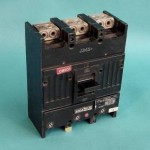
TJJ436300 General Electric Circuit Breaker

TJJ436300 General Electric Circuit Breaker

MIDWEST buys surplus, old, used, obsolete, and even ugly circuit breakers.  We are paranoid about the history and condition of these previously owned circuit breakers.  We are particularly concerned someone will try to sell us breakers that look good, but have been damaged by water.  We are especially cautious because of dramatic flooding in recent years. This week we got a call asking us if we wanted to buy like new circuit breakers that were flooded with water.  Our polite answer was a screaming “No!”  They were honest and told us the breakers had been flooded.  We will not even consider buying moisture damaged circuit breakers. They could even be brand new circuit breakers and still, no. 


These breakers could be cleaned up cosmetically so they look new and they might even pass the basic electrical tests, but we know they are still junk. If you tore a water damaged breaker completely apart, including the trip device and the operating mechanism, you would find rust and caked on dirt, even mud.  Under the stationary contacts, on the trip device hold down bolts, under the trip element, inside the trip element, everywhere in and under the operating mechanism.


The breaker may pass the insulation resistance tests, the contact resistance tests, and maybe even the over current tests. And, if you don’t bother to take the cover off, you might never know that the breaker was damaged by water or extreme humidity.  We know that plants that have been flooded will go through a thorough switchgear on site reconditioning process. Switchgear, including circuit breakers, will be restored to operating condition in an effort to get the power back on as quickly as possible. But these are emergency situations and getting replacement equipment quickly may not be possible.  So one should not compare such an extreme circumstance with the normal world of a Switchgear Service Shop. 


We want to know the history of equipment we purchase and we can not rely on that information being always accurate. Everything must be completely checked out, reconditioned.  And because equipment passes standardized tests, does not mean it is reliable for reuse.  Reconditioning will determine if it will be reliable after passing the standardize tests and MIDWEST’s other reliability centered tests. But testing alone does not determine reliability.

Aluminum Feeders Damage Old Circuit Breakers

July 2nd, 2010 Comments off

MIDWEST had a customer that seemed to call us about every 5 to 6 months for a replacement circuit breaker. This went on for about three years, before we noticed the pattern. We recognized it because he started calling the same Engineer.   We asked why he needed so many reconditioned replacement circuit breakers over the past two or three years. It seems their facility was built in the 1970s when copper was so scarce and expensive that many projects were built using aluminum cables.  Unfortunately some installations did not use the correct lugs or failed to install the lugs properly. We were very surprised they didn’t have these problems, or worse, decades ago.  We asked them if they still had a couple of the old damaged circuit breakers laying around.  Could they send us one or more of the old circuit breakers that had been damaged, so we could inspect them and give some recommendations on how to prevent future problems.  Inspection of two of their used circuit breakers that had failed, showed extensive heat and arcing damage at one or more of the load side lugs.  We have seen this type damage many times and it invariably was caused by cables that had become loose inside the lug or lugs that had become loose at the breaker connection.  One of our senior engineers worked in electrical construction during the years aluminum cables were used.  He explained how this could be dangerous and he also was very surprised they didn’t have problems many years ago.  He said a lot of new circuit breakers and MLO, ie main lugs only, panel boards were damaged when the aluminum cable terminations failed in the years after installation. He had one strong recommendation.  Hire an old time electrician who remembers those days and knows from experience what has to be done to correct things.  He said this can be a challenge. But, if they don’t do something, they may lose more than an occasional old circuit breaker. He also said to be extremely careful when installing a replacement circuit breaker. Always turn all the power off, including the feeder into the old power panel or panelboard. Safety first.

Disaster Replacement Circuit Breakers

June 25th, 2010 Comments off

An engineer called MIDWEST and asked how he could make sure a replacement for one of his old obsolete circuit breakers was not something out of one of the US disaster areas. He said it was a used replacement circuit breaker, but it looked shiny as new and seemed to operate okay. But he just had a bad feeling. To MIDWEST, that means he knows something he isn’t telling us. Regardless, here’s the short answer to his question. If you are qualified, remove the cover from the circuit breaker. Remove the arc chutes. On old circuit breakers, be careful, because the arc chutes may fall out in a dozen pieces. Remove the lugs.  Carefully remove the trip device.  Be sure not to lose any barriers or arc dividers. Then a close visual inspection must be made to detect any signs of corrosion or contamination on the breaker operating mechanism or inside the circuit breaker trip device or under the current carrying components. If the breaker got wet, corrosion should be easy to spot, but be sure to make a hard focused inspection.  Something more than a cosmetic look. During this process, look for signs that someone else has already tried to recondition the circuit breaker. Just cleaning a used or even a new circuit breaker, after it has been immersed in water, can be nearly impossible. There will be corrosion and dirt, even mud, in areas that are inaccessible. The trip device must be taken apart. MIDWEST has experience repairing old trip devices. It usually just isn’t worth the time. And if you mess with the trip element, there is a whole sequence of over current tests that must be performed afterwards. You can’t take a trip device apart, put it back together, and not completely test the circuit breaker afterwards. So, if you suspect an old, obsolete, or new circuit breaker has been exposed to water or mud, your best decision might be to destroy it and then throw it in the trash. Note, we strongly encourage destruction of any circuit breaker that is defective, so no one tries to reuse it. If you find nothing to indicate the breaker was damaged, then you have to put it all properly back together and test it.